Elevate Your Designs with Vintage Ornamental Decorative Elements V
A Curated Collection for Timeless Elegance
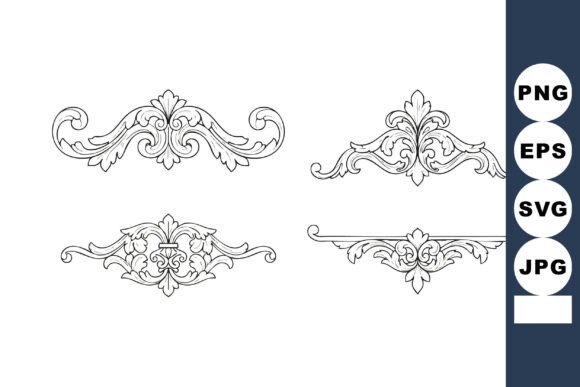
In the constant pursuit of the perfect visual, designers often find themselves looking backward to move forward. There is a specific weight and gravitas to historical design that modern minimalism sometimes struggles to replicate. This is where Vintage Ornamental Decorative Elements V enters the conversation. It is not merely a random assortment of shapes; it is a carefully curated vector collection presenting intricate floral scrolls and classic motifs. Rendered in a stark black and white palette, this asset kit is engineered to bring a graceful, sophisticated mood to any project. For the creative professional, this isn't just decoration; it is a tool for storytelling.
The visual personality of this collection is rooted in the elegance of the past. We are looking at high-contrast ornamental work that features flowing lines, botanical flourishes, and symmetrical arrangements typical of vintage engraving. The "black and white" description is key here. By stripping away color, the focus shifts entirely to form and line weight. This makes the elements incredibly versatile. They can act as the primary visual anchor on a book cover or serve as a subtle background texture on a wedding invitation. The aesthetic is undeniably classic, yet it remains relevant because high-quality craftsmanship never really goes out of style. Whether you are working on a logo design for a luxury brand or crafting social media graphics for a boutique hotel, these elements provide that immediate sense of heritage and trust.
Practical Applications Across Industries
Understanding where Vintage Ornamental Decorative Elements V works best requires a look at the specific needs of modern creators. This collection is a powerhouse for brand identity development. Imagine a craft distillery or a high-end chocolatier; their branding relies heavily on textures that suggest care, tradition, and quality. Using these floral scrolls on packaging labels or business cards instantly communicates that the product is artisanal. It bridges the gap between packaging design and consumer psychology, suggesting that the product inside is just as refined as the wrapping.
Beyond physical products, the digital space is hungry for this kind of depth. In editorial design and web design, flat, sterile layouts are becoming tired. Incorporating these vintage vectors as section dividers, corner accents, or hero image overlays can break the monotony of a standard grid. For publishers and bloggers, these elements are perfect for creating distinct headers or pull quotes that draw the reader's eye. They add a layer of professionalism to a layout that generic stock photos simply cannot achieve. Furthermore, for entrepreneurs and small business owners looking to create their own assets, having access to high-quality design assets like these allows for the creation of premium-looking materials without the overhead of a full design agency.
Mastering Visual Hierarchy and Brand Perception
The strategic use of ornamental elements goes far beyond simple beautification. In design theory, these details are crucial for managing visual hierarchy. Vintage Ornamental Decorative Elements V can be used to frame key information. By placing a scroll around a headline or a floral border around a call-to-action, you naturally increase the visual weight of that specific area. This guides the viewer’s eye exactly where you want it to go, improving readability and audience engagement.
Consistency is the backbone of a strong brand. When you integrate a specific style of ornamentation—like the elegant scrolls found in this vector pack—across your website, your social feeds, and your print materials, you create a cohesive visual language. This repetition builds recognition. Over time, your audience begins to associate that specific "classic" aesthetic with your brand. It influences brand perception, positioning your business as established, reliable, and detail-oriented. It is a subtle psychological trigger; if a brand cares enough to perfect the swirl on a corner graphic, they likely care about the quality of their service or product, too.
Integration with Modern Typography
One of the challenges with vintage assets is ensuring they don't clash with modern typefaces. However, the black and white nature of Vintage Ornamental Decorative Elements V makes it a surprisingly flexible partner for modern typography. The key is contrast and balance. Because the ornaments are intricate and detailed, they pair beautifully with clean, geometric sans serif fonts. The simplicity of the sans serif allows the ornament to shine without overwhelming the viewer.
Conversely, if you are aiming for a fully immersive historical vibe, pairing these scrolls with a sophisticated serif font or a flowing script font can create a rich, textured look suitable for formal invitations or high-end lookbooks. The trick is to avoid using a handwritten font that is too casual, as it might undercut the elegance of the vector work. Think of the ornament as the frame and the typography as the picture. They need to complement each other. A premium font paired with a premium vector ornament creates a synergy that elevates the entire project, whether it is a website banner or a printed flyer.
Technical Guidance and Licensing Considerations
For crafters and hobbyists, the technical specifications of a file package are just as important as the visual design. Vintage Ornamental Decorative Elements V comes as a downloadable ZIP file that includes SVG, EPS, JPG, and PNG files. This is the industry standard for versatility.
- SVG and EPS: These are vector formats. They are infinitely scalable, meaning you can enlarge a small floral scroll to cover a billboard without losing a single pixel of quality. This is essential for large-format printing and professional logo design.
- PNG: This format usually comes with a transparent background, making it perfect for layering over photos in social media graphics or website sliders.
- JPG: Best for quick mockups or situations where file size needs to be minimized.
When incorporating these into your workflow, take a moment to evaluate the project fit. Does the "graceful mood" of the scroll match the tone of your copy? Before finalizing a design, test the scale. Sometimes, an ornament looks best when it is massive and cropped, acting as a texture rather than a distinct symbol. Regarding licensing, it is always the responsibility of the content creator to review the terms of use. Ensure that the commercial font or asset license covers your specific application, whether it is for merchandise, digital goods, or client work. By respecting the licensing and utilizing the file formats correctly, you ensure a professional workflow that protects both your business and the assets you use.